The Long Range Desert Group in World War II by Gavin Mortimer
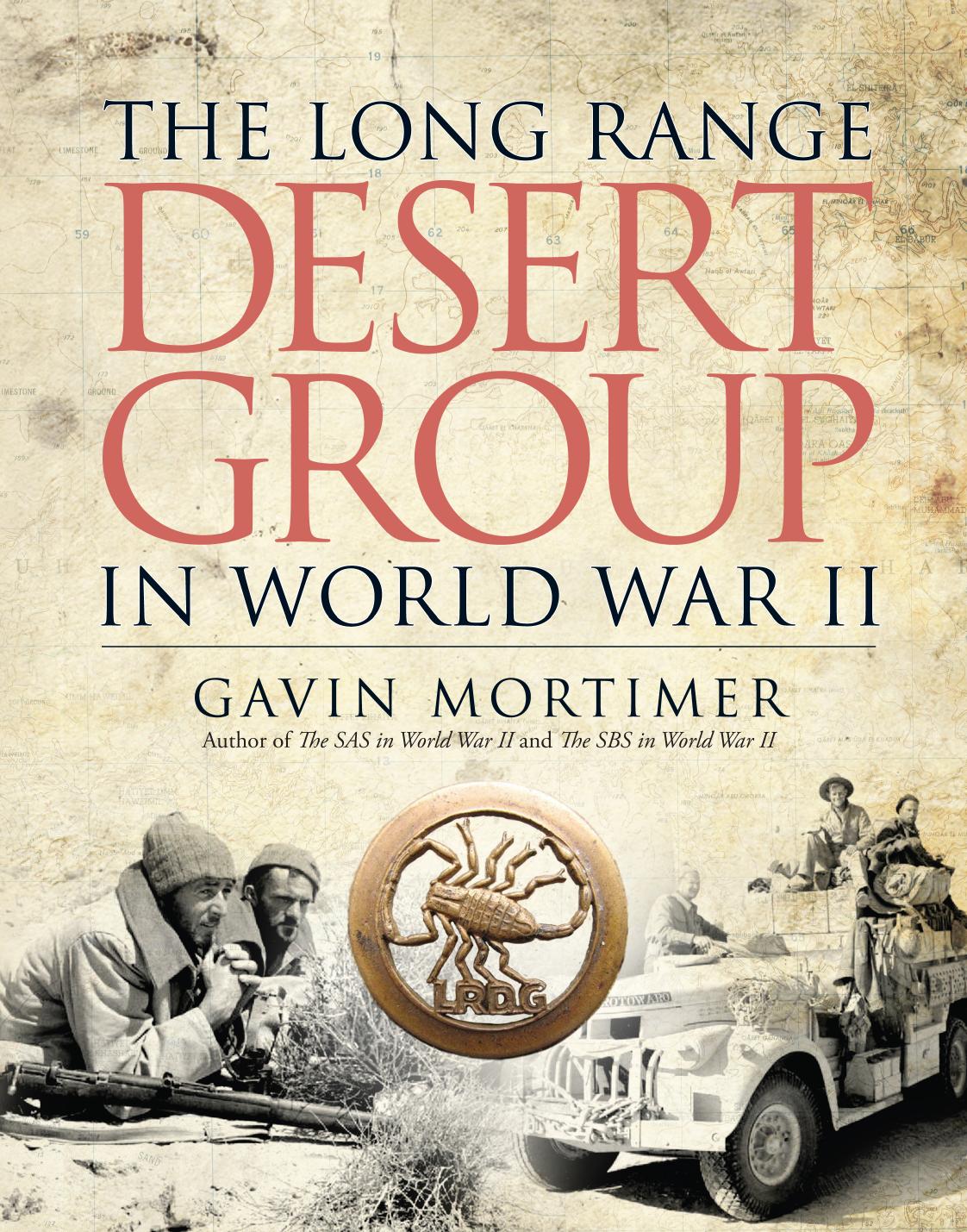
Author:Gavin Mortimer [Mortimer, Gavin]
Language: eng
Format: azw3, epub, pdf
ISBN: 9781472819352
Publisher: Bloomsbury Publishing
Published: 2017-04-20T04:00:00+00:00
Four members of the Rhodesian LRDG patrol with the original caption reading: Dod, Joe, Skinner and Mac. (Courtesy of the SAS Regimental Archive)
Gurdon’s batman began explaining his officer’s end, but he broke down and wept. Pleydell put an arm round the soldier’s shoulder and then he, too, cried for his dead friend. The rest of the soldiers moved discreetly away. Eventually a French soldier approached and offered his hip flask. Pleydell took a swig. It was water laced with rum. ‘I wiped my eyes on a dirty rag of a handkerchief, and blew my nose vigorously,’ said Pleydell.23 Then he set about tending Murray’s shattered elbow.
The death of Gurdon, and the acquisition by Stirling of 20 jeeps mounted with Vickers and Browning machine guns, signalled the end of the LRDG providing the SAS with a ‘Taxi Service’.
In the first six months of 1942 the SAS, thanks in large measure to the LRDG, had destroyed 143 enemy aircraft. As David Stirling noted: ‘By the end of June L Detachment had raided all the more important German and Italian aerodromes within 300 miles of the forward area at least once or twice. Methods of defence were beginning to improve and although the advantage still lay with L Detachment, the time had come to alter our own methods.’24
Indirect pressure may also have been brought to bear on Stirling to become self-sufficient by Guy Prendergast, CO of the LRDG, who was running out of patience with the SAS. According to Alastair Timpson, Prendergast was increasingly exasperated by what he considered Stirling’s rather cavalier approach to logistics. ‘One cannot blame Prendergast for being a little sour about the episodes when he had to cope with what went wrong in the administration of Stirling’s glamorous sorties,’ said Timpson.25 Timpson’s view was shared by Lieutenant Colonel John Hackett, a staff officer supervising light raiding forces in North Africa in 1942 (who would later command the 4th Parachute Brigade at Arnhem. After the war he recalled:
One of the chief problems was to keep these little armies out of each other’s way … There was the LRDG practising its intricately careful, cautious, skilful reconnaissance … but the SAS would come out to blow up some aeroplanes and they were very careless about it. Lovely men, but very careless and they would leave a lot of stuff around, and they would stir the thing up no end and out would come the Axis forces to see what had stirred it up, and they would find the LRDG.26
Download
The Long Range Desert Group in World War II by Gavin Mortimer.epub
The Long Range Desert Group in World War II by Gavin Mortimer.pdf
This site does not store any files on its server. We only index and link to content provided by other sites. Please contact the content providers to delete copyright contents if any and email us, we'll remove relevant links or contents immediately.
| Africa | Americas |
| Arctic & Antarctica | Asia |
| Australia & Oceania | Europe |
| Middle East | Russia |
| United States | World |
| Ancient Civilizations | Military |
| Historical Study & Educational Resources |
The Radium Girls by Kate Moore(12036)
100 Deadly Skills by Clint Emerson(4932)
Rise and Kill First by Ronen Bergman(4797)
The Templars by Dan Jones(4695)
The Doomsday Machine by Daniel Ellsberg(4493)
The Rape of Nanking by Iris Chang(4224)
Killing England by Bill O'Reilly(4008)
Stalin by Stephen Kotkin(3973)
Hitler in Los Angeles by Steven J. Ross(3949)
12 Strong by Doug Stanton(3554)
Hitler's Monsters by Eric Kurlander(3352)
Blood and Sand by Alex Von Tunzelmann(3207)
The Code Book by Simon Singh(3197)
Darkest Hour by Anthony McCarten(3137)
The Art of War Visualized by Jessica Hagy(3014)
Hitler's Flying Saucers: A Guide to German Flying Discs of the Second World War by Stevens Henry(2759)
Babylon's Ark by Lawrence Anthony(2686)
The Second World Wars by Victor Davis Hanson(2529)
Tobruk by Peter Fitzsimons(2521)
